Useful Perhaps

"What I'm use to isn't useful anymore."
~Duawne Starling, singer/songwriter


From Alice Walker, with Love, to the President-elect

Nov. 5, 2008

Dear Brother Obama,

You have no idea, really, of how profound this moment is for us. Us being the black people of the Southern United States. You think you know, because you are thoughtful, and you have studied our history. But seeing you deliver the torch so many others before you carried, year after year, decade after decade, century after century, only to be struck down before igniting the flame of justice and of law, is almost more than the heart can bear. And yet, this observation is not intended to burden you, for you are of a different time, and, indeed, because of all the relay runners before you, North America is a different place. It is really only to say: Well done. We knew, through all the generations, that you were with us, in us, the best of the spirit of Africa and of the Americas. Knowing this, that you would actually appear, someday, was part of our strength. Seeing you take your rightful place, based solely on your wisdom, stamina and character, is a balm for the weary warriors of hope, previously only sung about.

I would advise you to remember that you did not create the disaster that the world is experiencing, and you alone are not responsible for bringing the world back to balance. A primary responsibility that you do have, however, is to cultivate happiness in your own life. To make a schedule that permits sufficient time of rest and play with your gorgeous wife and lovely daughters. And so on. One gathers that your family is large. We are used to seeing men in the White House soon become juiceless and as white-haired as the building; we notice their wives and children looking strained and stressed. They soon have smiles so lacking in joy that they remind us of scissors. This is no way to lead. Nor does your family deserve this fate. One way of thinking about all this is: It is so bad now that there is no excuse not to relax. From your happy, relaxed state, you can model real success, which is all that so many people in the world really want. They may buy endless cars and houses and furs and gobble up all the attention and space they can manage, or barely manage, but this is because it is not yet clear to them that success is truly an inside job. That it is within the reach of almost everyone.

I would further advise you not to take on other people's enemies. Most damage that others do to us is out of fear, humiliation and pain. Those feelings occur in all of us, not just in those of us who profess a certain religious or racial devotion. We must learn actually not to have enemies, but only confused adversaries who are ourselves in disguise. It is understood by all that you are commander in chief of the United States and are sworn to protect our beloved country; this we understand, completely. However, as my mother used to say, quoting a Bible with which I often fought, "hate the sin, but love the sinner." There must be no more crushing of whole communities, no more torture, no more dehumanizing as a means of ruling a people's spirit. This has already happened to people of color, poor people, women, children. We see where this leads, where it has led.

A good model of how to "work with the enemy" internally is presented by the Dalai Lama, in his endless caretaking of his soul as he confronts the Chinese government that invaded Tibet. Because, finally, it is the soul that must be preserved, if one is to remain a credible leader. All else might be lost; but when the soul dies, the connection to earth, to peoples, to animals, to rivers, to mountain ranges, purple and majestic, also dies. And your smile, with which we watch you do gracious battle with unjust characterizations, distortions and lies, is that expression of healthy self-worth, spirit and soul, that, kept happy and free and relaxed, can find an answering smile in all of us, lighting our way, and brightening the world.

We are the ones we have been waiting for.

In Peace and Joy,
Alice Walker

Labels: ,


Thanks for the Dialogue

Aerin, thanks for the dialogue. I wrote this last week about today...

The Day After

As the 2008 Presidential campaign draws to a close, I've become increasingly less concerned about the specific outcomes of election night and more concerned by what we will have positioned ourselves to accomplish the day after. What are our prospects for success in meeting the tremendous challenges we as a country now face, when we've painted our countrymen and neighbors out to be devils and villains? How do we commit ourselves to meaningful action for the good of all God's creation and not become immobilized in our bickering over who is most right? I'm almost afraid that too much damage has been done: the fear mongering and race-baiting and name-calling and prejudice rationalizing. How do we begin to engage one another and work together if indeed I am (by your definition or my own) a tree-hugging, homo-loving, abortion-permitting, other-embracing, terrorist-empathizing, socialist-leaning un-real black man, whom you've been socialized to resist at all costs?


As I write, a song invades my consciousness, refusing not to be heard. I believe it echoes a way forward through this mess we’ve made for ourselves. The song is "Belfast to Boston," by James Taylor (listen). It's been my prayer for peace for about two years now…
There are rifles buried in the countryside by the rising of the moon.
May they lie there long forgotten, 'til they rust away into the ground.
It's a song of grace: blood bought, divinely inspired, blessed assurance that as followers in the way of Jesus we are not condemned to give as good (or as poorly) as we get. We can give better. Yes…
Who will bend this ancient hatred: will the killing to an end?
Who will swallow long injustice: take the devil for a countryman?
We can. This is the grace that is ours. "Freely you have received; freely give," Jesus says.

continue reading on GP>>>

Labels: , , , , , , , , ,


Throw Down the Guanlet!

I understand why Barack Obama is loathed to throw a punch at John McCain. I, like many other people of color, know from personal experience that as soon as Obama is deemed by a critical mass of whites to have stepped across the line (and there's no accounting for where that line is located at any given moment)--been "too" aggressive--he will be pegged as "an angry black man," and there's no coming back from that. There is little grace or benefit of the doubt given to the historically marginalized: we get no do-overs.

White supporters of Obama often lose sight of this very real double standard that highlights the meaning of "white privilege." As columnist and commentator Eugene Robinson has said, Obama must remain the most "un-aggrieved black man in America."

Although I don't want Obama to throw any ad hominem punches, I did want him to throw down the gauntlet last night and say to John McCain,

"When you find someone--anyone--at a John Lewis rally who screams out, 'KILL HIM!' in reference to you, Sen. McCain, then i will both repudiate Rep. Lewis for inciting such despicable behavior and condemn the degenerate who acted so despicably. Until then, you need to get your own house in order!"

Labels: , ,


Brian Surgery with a Switch-blade

I'm not sure how I feel about this GP post—whether it says something that ought to be voiced or whether I just fell into the trap of being the Black guy who commented on the black thing just because I happened to be more qualified to do so than most other GP contributing writers.

If nothing else, I do love the quote by Ralph Ellison...


The 4th of July is always a weird holiday for me. It's not that I don't enjoy the nostalgia, picnics, barbeque, fireworks and romanticizing of history—I do—yet as a student of history I can't help but be reminded of the July 5, 1852, speech of Frederick Douglass, given at Corinthian Hall in Rochester, NY. If you haven't, you should read it. "This Fourth of July is yours, not mine. You may rejoice, I must mourn." This was a full 10 years and then some before Emancipation. Though I do not mourn in the same way or for the same reasons, I feel I owe such proud patriotism some homage. So I remember in (mostly) quiet yet hopeful ambivalence. January 1st (1863) is much more straightforward for me.

Exactly one week prior to the Fourth this year (not by accident, I'm sure), the largest segmented survey of African-Americans ever conducted was released by the research firm Yankelovich. The study was commissioned by Radio One, the largest radio broadcasting company primarily targeting African Americans in the U.S. USA Today was given the first opportunity to review it.

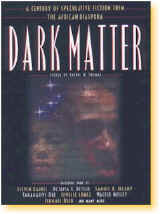
I am always amazed at how serendipitously life tends to sync up with what I am currently reading. On the very day Black America Today was released to the public, I coincidentally began reading Dark Matter, an anthology of speculative fiction. I was floored by the incisiveness of the following statement found in the anthology's introduction:
"In his 1953 collection of cultural criticism, Shadow and Act, Ralph Ellison cautioned readers not to stumble
'over that ironic obstacle which lies in the path of anyone who would fashion a theory of American Negro culture while ignoring the intricate network of connections which binds Negroes to the larger society. To do so is to attempt a delicate brain surgery with a switch-blade. And it is possible that any viable theory of Negro American culture obligates us to fashion a more adequate theory of American culture as a whole.'"
This became the lens through which I process the Radio One survey in the shadow of Independence Weekend. I'm not left with a cohesive image. Rather a disjointed vision cracked by nagging questions.

read more @ God's Politics blog>>>

Labels: ,


A Joke for Colored People

This seems to be the Year of Color in America—from ethnicities to rainbow coalitions.

Kevin Tan may be the first Chinese American to take the mat for USA gymnastics on the very year the Olympics go to Bejing. He's America's best hope in the rings.

The first American of East Indian descent, Raj Bhavsar, may finally make it on the USA Olympic team as well. Many gymnastics fans felt that by virtue of his performance at the last trials he should have made the 2004 team, but such is life (...in the West—sadly one can never be sure what dynamics are at play).

In order to understand the following comment, you'd have to know that my sister-in-law is of Indian descent as well.

While watching Raj today, I turned to my wife and said, "Quick, Leslie! Call Jocelyn and see if she knows him!"

*Update: Though 3rd best all around (separated from 2nd best by less than a tenth of a point) and the high scorer on the parallel bars, Raj was again denied and named 2nd alternate for the team—go figure.

Labels: , , ,


How Deep the Hole

The code continues and the algebra evolves: 'real Americans' now becomes 'working Americans = hard working Americans = white Americans'.


How is 'working Americans = hard working Americans = white Americans' less alienating than 'the bitter comment'?


Labels: , ,


If a Candidate Said This...

If a candidate said this, would s/he be castigated for elitism and racism? If so, by whom?

Labels: , , ,


The Whims of a Highly Partisan Supreme Court

I found this editorial by Cynthia Tucker highly representative of my thinking about the issue of requiring voter IDs. I just hate having conservatives claim the laws address voter fraud when it is clear they do no such thing, and those same conservatives are unwilling to address absentee voting which has been empirically linked to fraud.

Labels: , , ,


Elitist Persecution

Labels: , ,


The Cost of Better

I don't care if it's a double standard. When Obama chooses to engage Clinton on her native 'slash-n-burn' turf, it may always hurt him more than it helps. I'm glad for it. The double standard may be rooted in historic fear-based caricatures of the ever threatening black male. I don't care. I don't want a black President at any cost. I want a BETTER President.

That's the primary reason why I've supported Obama: he captures my imagination and makes me believe better is possible even in national and global politics. If he now chooses to believe his high-priced political consultants when they tell him that negativity is the only way to combat negativity and to show he's tough enough, SHAME ON HIM.

Here are a couple insightful critiques to that affect:
"The Low Road to Victory," NY Times
"How Obama Fell to Earth," NY Times

Labels: , ,


Speaking in Code: Is It a Lie If You Really Believe It?

After 6 weeks of such blatant fear-baiting that it successfully reversed the momentum that had reduced the Clinton's 25 point lead in PA to just 5 points, I am aghast at how many intelligent people have convinced themselves that race had little to do with the PA Primary results, but rather that voters' were compelled to support someone who "real Americans" can identify with.

Does anyone else hear the irony here?

"Real Americans" is code for our inability to talk about race. C'mon, the 'melting pot' that is Obama more adequately identifies with more people from more backgrounds than any other candidate in history! He's a white/black, immigrant/native, have/have not, educated/down-to-earth, basketball-playing/pleasure-bowling,
Muslim-named/Christian-faith-having, church going/intellectually-honest, community organizing, college professor turned public servant—who's benefited from every opportunity America has to offer, yet knows what it is to be marginalized. Who has ever embodied more of the complexities and dichotomies of what it is to be American? If race isn't the significant factor affecting "real Americans" ability to "identify" with Obama, what is it that alienates him from them that isn't also a part of either of the other candidates' narratives?

(Forgive my infatuation with the phrase "real Americans." After my "Imus/VA Tech" piece on GP, I was told by a commenter that, since and I were elitest kindred, I needed to join him on a long odyssey to discover how "real Americans" live. That is only a small step shy of what I use to hear from "real American" schoolmates: that if I wanted to "complain" about justice in America, I should "go back to Africa.")

Don't get me wrong. It's not that race is the only fear that has been exploited or happens to be the only difference some voters see between themselves and Obama. But race is a reasonable proxy for discussing other religious, cultural, educational and socio-economic differences in our American experience because it's so inextricably intertwined with most of these other 'concerns.' As such, race is far from being the trivial card game it is insidiously portrayed as. It is the thing America can't get past because "real Americans" struggle to admit its pervasiveness, its complexity and its impact on their thinking. But we can't ignore it; we know it's something: so we speak in code.

Michelle Martin of NPR's Tell Me More spent much of her Wednesday show (4/23) on the nexus of race in the media coverage of the political campaign. Do you hear what I hear?

Tell Me More Segments:
Clinton Takes Pennsylvania Primary
Pennsylvania Voters React
Media Experts Discuss Race Conversation

Labels: , ,


The Death of Political Hope

I hope I'm wrong, but I think the 2008 PA Primary marks the beginning of the end for the Obama campaign. David Brooks said it well on the News Hour last night: it's hard to be a "tough hope miester." I guess it's just as well that Google never put his name in their spellchecker.

I call it the end because the polls and pundits testify that the establishment has succeed in its two primary objectives (pun intended):
  1. Just enough Blacks have been convinced that it is somehow racial—and thus wrong—to vote for Obama in part out of racial solidarity. Thus, they vote against him, but seldom because of his politics.
  2. Just enough whites have been convinced that they shouldn't vote for him because of some fictitious, nebulous lack of solidarity on his part with "real Americans."
It's a political K.O. combination. And as soon as the polls seemed to show it, the pundits begin to tout it relentlessly. "Obama has a hard row to hoe." "More of Hillary's supporters now say they will not vote for Barak in a general election, than Barak supporters say they won't vote for Hillary." I literally lost count of how of how many times it was surmised on CNN with such visibly sincere regret that it would be 'nearly impossible for Barak to win the general election without the support of the average, white, lunch-bucket voter'—as if,
based on the reportedly 2100 Pennsylvanians polled, it were a foregone conclusion that Obama had lost majority white support everywhere and that blacks don't carry lunch-buckets.

(Need we talk about media's ability to shape public opinion. We even use qualifiers anymore, like "90% of the few blacks polled said they voted for Obama," to talk about our supposedly scientific sampling of people. If only 2000 people are sampled how many represent which demographic in order to be an adequate composite sampling of an entire state? I was flabbergasted by the number of times I heard "white" coupled with "won't" last night. It felt like all the language became us-versus-them.)

The way this has played out reminds me of the way voting districts in the South were redrawn after Reconstruction, after the Voting Rights Act of 1965 and then again in the 1990s. I remember reading as a student about gerrymandering. Blacks went from having no rights of citizenship prior to the Civil War (1863) to having voting districts drawn in such a way that it minimized the political influence of people of color throughout the period of Jim Crow ( roughly 1865-1965). "After the Voting Rights Act, racial gerrymandering was ironically 'flipped around' to create 'majority-minority' districts. Using this practice, also called 'affirmative gerrymandering,' these districts were created with the stated purpose of redressing previous discrimination to ensure higher ethnic minority representation in government." In the 1990s, this remediation was struck down as unconstitutional by the Supreme Court (right after the 'conservative revolution'). Yet, to the best of my knowledge, the rulings didn't posit a required remedy. It didn't require that lawmakers take maps of their states and cut them grid-like into equal size districts as a way to not favor any particular group. And I remember thinking:

If it is somehow wrong to construct voting districts along racial lines, it has to be just as perilous to deconstruct them for racial reasons as well. How do you determine which districts to redraw? How do you stop predominately white legislative bodies from redrawing every predominately colored district (just because it happens to be a district predominately of people of color)?

Thus, the Supreme Court ruled that the historically privileged could remain so.

I feel the same about the way the Establishment of both parties have come after Obama. Instead of offering intelligent critique of Barak Obama's policies, positions or politics, they have chosen instead to criticize his experience for being different from "real Americans." And a just enough people have bought it and decided to let the historically privileged remain so.


Labels: , ,


Class & Racism (Not Race) Harms Our Health


I found this amazingly interesting. It's a radio interview on NPR's Tell Me More. A new documentary series Unnatural Causes: Is Inequality Making Us Sick asks why minorities suffer disproportionately from many health problems. The film's producers discuss new research that suggests the mental stress of racism and poverty can take a direct toll on physical health.

The 7-part documentary will generally air Thursday nights. Check local listings for exact times.

Labels: , , ,


Don Imus and VA Tech—A Year Later

This is a re-write of some thoughts I posted a year ago after the VA Tech tragedy. It's a tough one, because it asks us to identify with those we viscerally (an perhaps rightfully) despise. But isn't that the message of Jesus on the Mount...

It was only a short year ago that "shock jock" Don Imus chose to refer to the accomplished women playing in the NCAA Basketball Finals as "nappy-headed hoes," later billing the match-up for his listeners as the "jiggaboos" versus the "wannabes." Imus' disrespect came as little surprise. He had a long history of slur and slander against Blacks, Africans, Asians, Latinos, Jews, Arabs, women, homosexuals, the poor, and just about anyone he considered unlike himself. And he had been paid handsomely to be so. The absurd brevity of his time spent off the air is perhaps only surpassed by the financial profitability of his return.

But the story that a middle-aged white man of means in the U.S. showed himself to be (or made his living as a) racist and sexist is not news to me. He is not the first, nor will he be the last. Not that what he did was not news-worthy, but his misogynistic or otherwise bigoted views seemed almost beside the point to me.

The thing that captured my attention regarding the Imus coverage the first half of April 2007 was the power dynamic. You see, power matters, and Imus had plenty of it, which he used unrepentantly to pummel with impunity the dispossessed, disenfranchised, or otherwise already marginalized. Don Imus, who is now with ABC, at the time had a nationally syndicated CBS radio show that was simulcast on MSNBC (how much money was he making?), which NPR reporter David Folkenflik further characterized as attracting "an educated, affluent audience." Most interesting to me, again, was not that this was the case; however, I was floored by the sheer number of "educated, affluent" folks who unreservedly championed Imus' "right" to do what he had been doing. It was as if the unapologetically privileged got together and declared, "How dare you have a problem with us continuing to exercise our privilege at your expense? This is the way it's supposed to be. Haven't you gotten the repeated memos?"

They said it was a First Amendment issue, to which my only response can be: Neither hate, discrimination, nor any other form of exclusionary practice or language is a First Amendment issue. Freedom of speech does not guarantee one the right to be heard. Hate does not deserve a publicly facilitated audience (e.g. radio and television air waves), and those who resource it privately deserve whatever nonviolent (particularly financial) backlash they get.

Then came the story of Seung Hui Cho. The Western world cried out in horror at the massacre Cho perpetrated on VA Tech's campus—"the single largest act of recorded handgun violence on U.S. soil in American history" (the qualifiers "recorded handgun violence" and "on U.S. soil" are important because they help to conceal our selective recollection and shocking history of violence, particularly that which has involved what we would call "state-sponsored terrorism" if it were directed at us from the outside).

And we wept. And so should we weep again in the upcoming weeks, but not just for Cho's victims. We should weep for Cho and others like him, who are victims as well ... of the Imuses of the world.

Complete the post at God's Politics blog>>>

Labels: , , ,


Last night's The Daily Show with John Stewart had the best treatment of the Obama speech on race and politics that I heard all day:


He followed that up with an attempt at adulthood:


Colbert also got in on the act:


Then this morning I found this post and this write up on Colbert's interview with Samantha Powers of "Hillary is a monster!" fame.

And major media outlets wonder why a large portion of Americans get their news from these guys. At least they admit their biases upfront--InDecision 2008, Something Approximating Election News with Something Approximating Honesty.

I also found this and figured here was as good a place as any to drop it in:


Labels: , , , ,


Exorcising Our Demons

This is a Home-Training essay...

If properly understood, Senator Barak Obama's remarks today at the Constitution Center in Philadelphia, PA, constitute one of the most significant and honest public addresses ever made on America's 400-year struggle with race. Had we heeded DuBois' 1903 prophetic warning, The Souls of Black Folks, it would have found voice in the 20th century. There is a conversation America has, literally in some cases, been dying to have. That conversation is not in favor of any particular presidential candidate. Please don't relegate and dismiss it on those grounds. However, it is unlikely that we would be so inescapably confronted with such issues outside of a person of color experiencing some measure of success in a bid for the highest elected office in the land.


In her God's Politics post, "Putting Rev. Wright's Preaching in Perspective," Diana Butler Bass implored us to listen better to one another. Now let me suggest something to listen for. The thought is simple, but the lesson is not: Not everyone has experienced America in the same way. And we must lay down the self-absorption that makes us think this doesn't matter, if we are ever to begin to appreciate each other.

Permit a timely example. If you are not Black, you may not know that the Black church is the theatre in which Blacks have historically exorcised their demons—with the pastor as both theologue and thespian embodying the collective process of redemption for his/her people every week. Initially, church was the one place we could go that we weren't under massa's whip, which is why we relish it. Eventually, it became the center and sustainer of our community. So most of us understand Rev. Jeremiah Wright in a way that may escape others.

Church equaled life for us. Where else could we go to exorcise the demons of injustice and intransigence? Where else could we go to exorcise the marginalization and invalidation, the defeat and depression, the struggle and scorn? Where else could we go when our children asked—as my daughter did while coloring just the other day—if Jesus were brown or white? My answer was that he was born to Jewish parents, people of color, whom we usually refer to as olive-skinned. And her heartrending response at 5-years-old was: Why can't he be white? In all the pictures, he's white! Where else could we give cathartic voice to our inner demons in hopes of being transformed like the phoenix into "the better angels of our nature?"

Continue reading on God's Politics blog>>> Part 1 & Part 2

Labels: , , ,


“A More Perfect Union”

Did you hear Obama's speech today?!!!

If properly understood, it should go down as one of the greatest speeches of the early 21st century and, if we had heeded DuBois prophetic warning, should have found voice in the 20th century.

This is the New Politics, and it is as noble as we've dared to dream! (Sorry to disappoint George Will.)

The fact that some have dutifully taken up their roles as cynic is just sad for them. I pray we don't allow them to rule the day.

Here's the video:


And for those who cherish the written word here's the full transcript:


“A More Perfect Union"
Remarks of Senator Barack Obama
Constitution Center
Tuesday, March 18th, 2008
Philadelphia, Pennsylvania
(full manuscript, as prepared for delivery)


“We the people, in order to form a more perfect union.”

Two hundred and twenty one years ago, in a hall that still stands across the street, a group of men gathered and, with these simple words, launched America’s improbable experiment in democracy. Farmers and scholars; statesmen and patriots who had traveled across an ocean to escape tyranny and persecution finally made real their declaration of independence at a Philadelphia convention that lasted through the spring of 1787.

The document they produced was eventually signed but ultimately unfinished. It was stained by this nation’s original sin of slavery, a question that divided the colonies and brought the convention to a stalemate until the founders chose to allow the slave trade to continue for at least twenty more years, and to leave any final resolution to future generations.

Of course, the answer to the slavery question was already embedded within our Constitution – a Constitution that had at is very core the ideal of equal citizenship under the law; a Constitution that promised its people liberty, and justice, and a union that could be and should be perfected over time.

And yet words on a parchment would not be enough to deliver slaves from bondage, or provide men and women of every color and creed their full rights and obligations as citizens of the United States. What would be needed were Americans in successive generations who were willing to do their part – through protests and struggle, on the streets and in the courts, through a civil war and civil disobedience and always at great risk - to narrow that gap between the promise of our ideals and the reality of their time.

This was one of the tasks we set forth at the beginning of this campaign – to continue the long march of those who came before us, a march for a more just, more equal, more free, more caring and more prosperous America. I chose to run for the presidency at this moment in history because I believe deeply that we cannot solve the challenges of our time unless we solve them together – unless we perfect our union by understanding that we may have different stories, but we hold common hopes; that we may not look the same and we may not have come from the same place, but we all want to move in the same direction – towards a better future for of children and our grandchildren.

This belief comes from my unyielding faith in the decency and generosity of the American people. But it also comes from my own American story.

I am the son of a black man from Kenya and a white woman from Kansas. I was raised with the help of a white grandfather who survived a Depression to serve in Patton’s Army during World War II and a white grandmother who worked on a bomber assembly line at Fort Leavenworth while he was overseas. I’ve gone to some of the best schools in America and lived in one of the world’s poorest nations. I am married to a black American who carries within her the blood of slaves and slaveowners – an inheritance we pass on to our two precious daughters. I have brothers, sisters, nieces, nephews, uncles and cousins, of every race and every hue, scattered across three continents, and for as long as I live, I will never forget that in no other country on Earth is my story even possible.

It’s a story that hasn’t made me the most conventional candidate. But it is a story that has seared into my genetic makeup the idea that this nation is more than the sum of its parts – that out of many, we are truly one.

Throughout the first year of this campaign, against all predictions to the contrary, we saw how hungry the American people were for this message of unity. Despite the temptation to view my candidacy through a purely racial lens, we won commanding victories in states with some of the whitest populations in the country. In South Carolina, where the Confederate Flag still flies, we built a powerful coalition of African Americans and white Americans.

This is not to say that race has not been an issue in the campaign. At various stages in the campaign, some commentators have deemed me either “too black” or “not black enough.” We saw racial tensions bubble to the surface during the week before the South Carolina primary. The press has scoured every exit poll for the latest evidence of racial polarization, not just in terms of white and black, but black and brown as well.

And yet, it has only been in the last couple of weeks that the discussion of race in this campaign has taken a particularly divisive turn.

On one end of the spectrum, we’ve heard the implication that my candidacy is somehow an exercise in affirmative action; that it’s based solely on the desire of wide-eyed liberals to purchase racial reconciliation on the cheap. On the other end, we’ve heard my former pastor, Reverend Jeremiah Wright, use incendiary language to express views that have the potential not only to widen the racial divide, but views that denigrate both the greatness and the goodness of our nation; that rightly offend white and black alike.

I have already condemned, in unequivocal terms, the statements of Reverend Wright that have caused such controversy. For some, nagging questions remain. Did I know him to be an occasionally fierce critic of American domestic and foreign policy? Of course. Did I ever hear him make remarks that could be considered controversial while I sat in church? Yes. Did I strongly disagree with many of his political views? Absolutely – just as I’m sure many of you have heard remarks from your pastors, priests, or rabbis with which you strongly disagreed.

But the remarks that have caused this recent firestorm weren’t simply controversial. They weren’t simply a religious leader’s effort to speak out against perceived injustice. Instead, they expressed a profoundly distorted view of this country – a view that sees white racism as endemic, and that elevates what is wrong with America above all that we know is right with America; a view that sees the conflicts in the Middle East as rooted primarily in the actions of stalwart allies like Israel, instead of emanating from the perverse and hateful ideologies of radical Islam.

As such, Reverend Wright’s comments were not only wrong but divisive, divisive at a time when we need unity; racially charged at a time when we need to come together to solve a set of monumental problems – two wars, a terrorist threat, a falling economy, a chronic health care crisis and potentially devastating climate change; problems that are neither black or white or Latino or Asian, but rather problems that confront us all.

Given my background, my politics, and my professed values and ideals, there will no doubt be those for whom my statements of condemnation are not enough. Why associate myself with Reverend Wright in the first place, they may ask? Why not join another church? And I confess that if all that I knew of Reverend Wright were the snippets of those sermons that have run in an endless loop on the television and You Tube, or if Trinity United Church of Christ conformed to the caricatures being peddled by some commentators, there is no doubt that I would react in much the same way.

But the truth is, that isn’t all that I know of the man. The man I met more than twenty years ago is a man who helped introduce me to my Christian faith, a man who spoke to me about our obligations to love one another; to care for the sick and lift up the poor. He is a man who served his country as a U.S. Marine; who has studied and lectured at some of the finest universities and seminaries in the country, and who for over thirty years led a church that serves the community by doing God’s work here on Earth – by housing the homeless, ministering to the needy, providing day care services and scholarships and prison ministries, and reaching out to those suffering from HIV/AIDS.

In my first book, Dreams From My Father, I described the experience of my first service at Trinity:

“People began to shout, to rise from their seats and clap and cry out, a forceful wind carrying the reverend’s voice up into the rafters….And in that single note – hope! – I heard something else; at the foot of that cross, inside the thousands of churches across the city, I imagined the stories of ordinary black people merging with the stories of David and Goliath, Moses and Pharaoh, the Christians in the lion’s den, Ezekiel’s field of dry bones. Those stories – of survival, and freedom, and hope – became our story, my story; the blood that had spilled was our blood, the tears our tears; until this black church, on this bright day, seemed once more a vessel carrying the story of a people into future generations and into a larger world. Our trials and triumphs became at once unique and universal, black and more than black; in chronicling our journey, the stories and songs gave us a means to reclaim memories that we didn’t need to feel shame about…memories that all people might study and cherish – and with which we could start to rebuild.”

That has been my experience at Trinity. Like other predominantly black churches across the country, Trinity embodies the black community in its entirety – the doctor and the welfare mom, the model student and the former gang-banger. Like other black churches, Trinity’s services are full of raucous laughter and sometimes bawdy humor. They are full of dancing, clapping, screaming and shouting that may seem jarring to the untrained ear. The church contains in full the kindness and cruelty, the fierce intelligence and the shocking ignorance, the struggles and successes, the love and yes, the bitterness and bias that make up the black experience in America.

And this helps explain, perhaps, my relationship with Reverend Wright. As imperfect as he may be, he has been like family to me. He strengthened my faith, officiated my wedding, and baptized my children. Not once in my conversations with him have I heard him talk about any ethnic group in derogatory terms, or treat whites with whom he interacted with anything but courtesy and respect. He contains within him the contradictions – the good and the bad – of the community that he has served diligently for so many years.

I can no more disown him than I can disown the black community. I can no more disown him than I can my white grandmother – a woman who helped raise me, a woman who sacrificed again and again for me, a woman who loves me as much as she loves anything in this world, but a woman who once confessed her fear of black men who passed by her on the street, and who on more than one occasion has uttered racial or ethnic stereotypes that made me cringe.

These people are a part of me. And they are a part of America, this country that I love.

CONTINUE READING "A More Perfect Union">>>


Some will see this as an attempt to justify or excuse comments that are simply inexcusable. I can assure you it is not. I suppose the politically safe thing would be to move on from this episode and just hope that it fades into the woodwork. We can dismiss Reverend Wright as a crank or a demagogue, just as some have dismissed Geraldine Ferraro, in the aftermath of her recent statements, as harboring some deep-seated racial bias.

But race is an issue that I believe this nation cannot afford to ignore right now. We would be making the same mistake that Reverend Wright made in his offending sermons about America – to simplify and stereotype and amplify the negative to the point that it distorts reality.

The fact is that the comments that have been made and the issues that have surfaced over the last few weeks reflect the complexities of race in this country that we’ve never really worked through – a part of our union that we have yet to perfect. And if we walk away now, if we simply retreat into our respective corners, we will never be able to come together and solve challenges like health care, or education, or the need to find good jobs for every American.

Understanding this reality requires a reminder of how we arrived at this point. As William Faulkner once wrote, “The past isn’t dead and buried. In fact, it isn’t even past.” We do not need to recite here the history of racial injustice in this country. But we do need to remind ourselves that so many of the disparities that exist in the African-American community today can be directly traced to inequalities passed on from an earlier generation that suffered under the brutal legacy of slavery and Jim Crow.

Segregated schools were, and are, inferior schools; we still haven’t fixed them, fifty years after Brown v. Board of Education, and the inferior education they provided, then and now, helps explain the pervasive achievement gap between today’s black and white students.

Legalized discrimination - where blacks were prevented, often through violence, from owning property, or loans were not granted to African-American business owners, or black homeowners could not access FHA mortgages, or blacks were excluded from unions, or the police force, or fire departments – meant that black families could not amass any meaningful wealth to bequeath to future generations. That history helps explain the wealth and income gap between black and white, and the concentrated pockets of poverty that persists in so many of today’s urban and rural communities.

A lack of economic opportunity among black men, and the shame and frustration that came from not being able to provide for one’s family, contributed to the erosion of black families – a problem that welfare policies for many years may have worsened. And the lack of basic services in so many urban black neighborhoods – parks for kids to play in, police walking the beat, regular garbage pick-up and building code enforcement – all helped create a cycle of violence, blight and neglect that continue to haunt us.

This is the reality in which Reverend Wright and other African-Americans of his generation grew up. They came of age in the late fifties and early sixties, a time when segregation was still the law of the land and opportunity was systematically constricted. What’s remarkable is not how many failed in the face of discrimination, but rather how many men and women overcame the odds; how many were able to make a way out of no way for those like me who would come after them.

But for all those who scratched and clawed their way to get a piece of the American Dream, there were many who didn’t make it – those who were ultimately defeated, in one way or another, by discrimination. That legacy of defeat was passed on to future generations – those young men and increasingly young women who we see standing on street corners or languishing in our prisons, without hope or prospects for the future. Even for those blacks who did make it, questions of race, and racism, continue to define their worldview in fundamental ways. For the men and women of Reverend Wright’s generation, the memories of humiliation and doubt and fear have not gone away; nor has the anger and the bitterness of those years. That anger may not get expressed in public, in front of white co-workers or white friends. But it does find voice in the barbershop or around the kitchen table. At times, that anger is exploited by politicians, to gin up votes along racial lines, or to make up for a politician’s own failings.

And occasionally it finds voice in the church on Sunday morning, in the pulpit and in the pews. The fact that so many people are surprised to hear that anger in some of Reverend Wright’s sermons simply reminds us of the old truism that the most segregated hour in American life occurs on Sunday morning. That anger is not always productive; indeed, all too often it distracts attention from solving real problems; it keeps us from squarely facing our own complicity in our condition, and prevents the African-American community from forging the alliances it needs to bring about real change. But the anger is real; it is powerful; and to simply wish it away, to condemn it without understanding its roots, only serves to widen the chasm of misunderstanding that exists between the races.

In fact, a similar anger exists within segments of the white community. Most working- and middle-class white Americans don’t feel that they have been particularly privileged by their race. Their experience is the immigrant experience – as far as they’re concerned, no one’s handed them anything, they’ve built it from scratch. They’ve worked hard all their lives, many times only to see their jobs shipped overseas or their pension dumped after a lifetime of labor. They are anxious about their futures, and feel their dreams slipping away; in an era of stagnant wages and global competition, opportunity comes to be seen as a zero sum game, in which your dreams come at my expense. So when they are told to bus their children to a school across town; when they hear that an African American is getting an advantage in landing a good job or a spot in a good college because of an injustice that they themselves never committed; when they’re told that their fears about crime in urban neighborhoods are somehow prejudiced, resentment builds over time.

Like the anger within the black community, these resentments aren’t always expressed in polite company. But they have helped shape the political landscape for at least a generation. Anger over welfare and affirmative action helped forge the Reagan Coalition. Politicians routinely exploited fears of crime for their own electoral ends. Talk show hosts and conservative commentators built entire careers unmasking bogus claims of racism while dismissing legitimate discussions of racial injustice and inequality as mere political correctness or reverse racism.

Just as black anger often proved counterproductive, so have these white resentments distracted attention from the real culprits of the middle class squeeze – a corporate culture rife with inside dealing, questionable accounting practices, and short-term greed; a Washington dominated by lobbyists and special interests; economic policies that favor the few over the many. And yet, to wish away the resentments of white Americans, to label them as misguided or even racist, without recognizing they are grounded in legitimate concerns – this too widens the racial divide, and blocks the path to understanding.

This is where we are right now. It’s a racial stalemate we’ve been stuck in for years. Contrary to the claims of some of my critics, black and white, I have never been so naïve as to believe that we can get beyond our racial divisions in a single election cycle, or with a single candidacy – particularly a candidacy as imperfect as my own.

But I have asserted a firm conviction – a conviction rooted in my faith in God and my faith in the American people – that working together we can move beyond some of our old racial wounds, and that in fact we have no choice is we are to continue on the path of a more perfect union.

For the African-American community, that path means embracing the burdens of our past without becoming victims of our past. It means continuing to insist on a full measure of justice in every aspect of American life. But it also means binding our particular grievances – for better health care, and better schools, and better jobs - to the larger aspirations of all Americans -- the white woman struggling to break the glass ceiling, the white man whose been laid off, the immigrant trying to feed his family. And it means taking full responsibility for own lives – by demanding more from our fathers, and spending more time with our children, and reading to them, and teaching them that while they may face challenges and discrimination in their own lives, they must never succumb to despair or cynicism; they must always believe that they can write their own destiny.

Ironically, this quintessentially American – and yes, conservative – notion of self-help found frequent expression in Reverend Wright’s sermons. But what my former pastor too often failed to understand is that embarking on a program of self-help also requires a belief that society can change.

The profound mistake of Reverend Wright’s sermons is not that he spoke about racism in our society. It’s that he spoke as if our society was static; as if no progress has been made; as if this country – a country that has made it possible for one of his own members to run for the highest office in the land and build a coalition of white and black; Latino and Asian, rich and poor, young and old -- is still irrevocably bound to a tragic past. But what we know -- what we have seen – is that America can change. That is true genius of this nation. What we have already achieved gives us hope – the audacity to hope – for what we can and must achieve tomorrow.

In the white community, the path to a more perfect union means acknowledging that what ails the African-American community does not just exist in the minds of black people; that the legacy of discrimination - and current incidents of discrimination, while less overt than in the past - are real and must be addressed. Not just with words, but with deeds – by investing in our schools and our communities; by enforcing our civil rights laws and ensuring fairness in our criminal justice system; by providing this generation with ladders of opportunity that were unavailable for previous generations. It requires all Americans to realize that your dreams do not have to come at the expense of my dreams; that investing in the health, welfare, and education of black and brown and white children will ultimately help all of America prosper.

In the end, then, what is called for is nothing more, and nothing less, than what all the world’s great religions demand – that we do unto others as we would have them do unto us. Let us be our brother’s keeper, Scripture tells us. Let us be our sister’s keeper. Let us find that common stake we all have in one another, and let our politics reflect that spirit as well.

For we have a choice in this country. We can accept a politics that breeds division, and conflict, and cynicism. We can tackle race only as spectacle – as we did in the OJ trial – or in the wake of tragedy, as we did in the aftermath of Katrina - or as fodder for the nightly news. We can play Reverend Wright’s sermons on every channel, every day and talk about them from now until the election, and make the only question in this campaign whether or not the American people think that I somehow believe or sympathize with his most offensive words. We can pounce on some gaffe by a Hillary supporter as evidence that she’s playing the race card, or we can speculate on whether white men will all flock to John McCain in the general election regardless of his policies.

We can do that.

But if we do, I can tell you that in the next election, we’ll be talking about some other distraction. And then another one. And then another one. And nothing will change.

That is one option. Or, at this moment, in this election, we can come together and say, “Not this time.” This time we want to talk about the crumbling schools that are stealing the future of black children and white children and Asian children and Hispanic children and Native American children. This time we want to reject the cynicism that tells us that these kids can’t learn; that those kids who don’t look like us are somebody else’s problem. The children of America are not those kids, they are our kids, and we will not let them fall behind in a 21st century economy. Not this time.

This time we want to talk about how the lines in the Emergency Room are filled with whites and blacks and Hispanics who do not have health care; who don’t have the power on their own to overcome the special interests in Washington, but who can take them on if we do it together.

This time we want to talk about the shuttered mills that once provided a decent life for men and women of every race, and the homes for sale that once belonged to Americans from every religion, every region, every walk of life. This time we want to talk about the fact that the real problem is not that someone who doesn’t look like you might take your job; it’s that the corporation you work for will ship it overseas for nothing more than a profit.

This time we want to talk about the men and women of every color and creed who serve together, and fight together, and bleed together under the same proud flag. We want to talk about how to bring them home from a war that never should’ve been authorized and never should’ve been waged, and we want to talk about how we’ll show our patriotism by caring for them, and their families, and giving them the benefits they have earned.

I would not be running for President if I didn’t believe with all my heart that this is what the vast majority of Americans want for this country. This union may never be perfect, but generation after generation has shown that it can always be perfected. And today, whenever I find myself feeling doubtful or cynical about this possibility, what gives me the most hope is the next generation – the young people whose attitudes and beliefs and openness to change have already made history in this election.

There is one story in particularly that I’d like to leave you with today – a story I told when I had the great honor of speaking on Dr. King’s birthday at his home church, Ebenezer Baptist, in Atlanta.

There is a young, twenty-three year old white woman named Ashley Baia who organized for our campaign in Florence, South Carolina. She had been working to organize a mostly African-American community since the beginning of this campaign, and one day she was at a roundtable discussion where everyone went around telling their story and why they were there.

And Ashley said that when she was nine years old, her mother got cancer. And because she had to miss days of work, she was let go and lost her health care. They had to file for bankruptcy, and that’s when Ashley decided that she had to do something to help her mom.

She knew that food was one of their most expensive costs, and so Ashley convinced her mother that what she really liked and really wanted to eat more than anything else was mustard and relish sandwiches. Because that was the cheapest way to eat.

She did this for a year until her mom got better, and she told everyone at the roundtable that the reason she joined our campaign was so that she could help the millions of other children in the country who want and need to help their parents too.

Now Ashley might have made a different choice. Perhaps somebody told her along the way that the source of her mother’s problems were blacks who were on welfare and too lazy to work, or Hispanics who were coming into the country illegally. But she didn’t. She sought out allies in her fight against injustice.

Anyway, Ashley finishes her story and then goes around the room and asks everyone else why they’re supporting the campaign. They all have different stories and reasons. Many bring up a specific issue. And finally they come to this elderly black man who’s been sitting there quietly the entire time. And Ashley asks him why he’s there. And he does not bring up a specific issue. He does not say health care or the economy. He does not say education or the war. He does not say that he was there because of Barack Obama. He simply says to everyone in the room, “I am here because of Ashley.”

“I’m here because of Ashley.” By itself, that single moment of recognition between that young white girl and that old black man is not enough. It is not enough to give health care to the sick, or jobs to the jobless, or education to our children.

But it is where we start. It is where our union grows stronger. And as so many generations have come to realize over the course of the two-hundred and twenty one years since a band of patriots signed that document in Philadelphia, that is where the perfection begins.

Labels: , , , ,


MLK and Identity Politics

I originally shared these thoughts at an early morning prayer breakfast in Marian, Indiana, on MLK Day this past January. I had been invited to Marian by my good friend Pat Hannon who is Asst. Dean of Chapel at Indiana Wesleyan University. Later that same morning I shared a story with the students of IWU and had the pleasure of getting to know several of them as we participated in the festivities of the rest of the day. The following is my inaugural post on the God's Politic's blog:

The 40th anniversary of Rev. Dr. Martin Luther King Jr.'s assassination - April 4, 1968 - will soon be upon us. As I remember Dr. King against the backdrop of this 2008 presidential election cycle, I reflect on what a brilliant political strategist he was. He was able to bring corporations to the point of acquiescence without resorting to violence or bribery. He was able to pass legislation that changed the daily lives of not only blacks but also women, people of faith, and immigrants - without ever being elected to public office or attempting to buy political influence. He was able to garner and leverage the attention of the entire international community on behalf of America's poor, marginalized, and disenfranchised - without ever being appointed to an ambassadorship or other high-profile international post. He was able to remind U.S. citizens what a democracy was and to engender a sense of moral responsibility that, more than 40 years later, challenges us to be the good we want to see in the world. King was a political genius.

With a vision this grand, one would think that the lion's share of King's work would have been on the national and international stage, yet somehow King expected to bring all this about by local, contextual, direct action: organizing to gain political access and self-determination for Blacks, advocating on behalf of unemployed Appalachian whites, striking with sanitation workers. I believe his ability to accomplish each of these things was predicated on a very simple, but profound realization: All politics are identity politics. The question is: whom does one choose to identify with?

Labels: ,


Geraldine Ferraro

Yesterday Geraldine Ferraro stepped down from her official post on the finance committee of the Hillary Clinton campaign for the presidency. I'm glad. I've been wondering how many times the surrogates of the Clinton campaign were going to get a pass on behavior like this.

Ferraro still hasn't come to terms with the fact that her comments were racist--not because she is prejudiced in any way (her record clearly suggests otherwise), but because of who she is (the same reason Hillary invited her to fund raise). Because of who she is, Geraldine Ferraro's words, despising Obama's being black, have the power to negatively and indiscriminately impact Obama's professional aspirations solely for racial reasons: that makes her words racist.

Racism isn't just a synonym for bigotry or prejudice. Racism connotes the unjust power that privilege has to inconvenience the lives of others by virtue of their race, ethnicity or national origin. Bigotry and prejudice are basically how one feels toward another. This is an important distinction. This is why we can speak of racism as being structural and systemic. It is also why we pass laws to limit people's ability to do this sort of thing, at least overtly.

I use to think one could be a bigot without being racist, yet not a racist without first being a bigot. Ferraro's comments--or perhaps the preponderance of inane such assaults coming from the Clinton camp--mark the first time I've consciously noted that one who is not prejudiced can do just as much racist damage as one who is.

Race is undoubtedly a part of who Barak Obama is, but it can't be used to belittle or even critique him--any more than Hillary Clinton's gender can justly be used against her. That's crossing the line.

*After being informed by Keith Olbermann of Ms. Ferraro's history of making such statements, I must reserve the right to alter the temperance of my views regarding her intent. Watch Olbermann's courageous response to Sen. Clinton's tepid reaction to Ms. Ferraro.

Labels: , ,


What Imus and Cho Have in Common

A few weeks ago "shock jock" Don Imus consciously, intentionally, knowingly chose to refer to women playing in the NCAA Basketball Finals as "nappy-headed hoes" later billing the match-up for his listeners as the "jiggaboos" versus the "wannabes." Imus' disrespect comes as little surprise. He has a long history of slur and slander against Blacks, Africans, Asians, Latinos, Jews, Arabs, women, homosexuals, poor and just about anyone he considers not like him. He's an equal-opportunist xenophobe, as the always incisive and insightful Dr. Cornel West points out. And he was paid handsomely to be so.

But the story that a middle-aged white man of means in America showed himself to be (or made his living as a) racist and sexist is not news to me. He is not the first, nor will he be the last. Not that what he did is not at all news worthy, but his misogynistic or otherwise bigoted views seem almost beside-the-point to me.

The thing that did capture my attention regarding the Imus coverage the first half of April was the power dynamic. You see, power matters, and Imus had plenty of it, which he used unrepentantly to pummel with impunity the dispossessed, disenfranchised or otherwise already marginalized. Don Imus had a nationally syndicated CBS radio show that was simulcast on MSNBC (how much money was he making?), which NPR reporter David Folkenflik further characterized as attracting "an educated, affluent audience" (I wouldn't know; I've never listened to him). Most interesting to me, again, was not that this was the case; however, I was floored by the sheer number of "educated, affluent" folks who unreservedly championed Imus' "right" to continue to do so. It was as if the unapologetically privileged got together and with one voice declared, "How dare you have a problem with us continuing to exercise our privilege at your expense? Your indignation is absurd. This is the way it's supposed to be. Haven't you gotten the repeated memos?"

And I've had my fill of those so indoctrinated by an imperial agenda that they are too blind to see: neither hate, discrimination nor any other form of exclusionary practice or language is a First Amendment issue. Freedom of speech does not guarantee one the right to be heard. Hate does not deserve a publicly facilitated audience (e.g. radio and television air waves), and those who resource it privately deserve whatever peaceful (particularly financial) backlash they get.

Then comes the story of Seung Hui Cho to redirect our attention. The Western world cries out in horror at the massacre he perpetrates on VA Tech's campus--"the single largest act of recorded hand-gun violence on US soil in American history" (the emphasis on certain phrases is important because the Western world has made a habit of selectively recording its dubious history, particularly that which has involved what we would call "state sponsored terrorism" if it were directed at us from the outside). And so we should weep, but not just for Cho's victims. For he was a victim as well... of the Don Imuses of the world.

The portions of Seung Hui Cho's multimedia manifesto released to the public heretofore read like the diary of the oppressed who had finally been transformed to embody the rationality and methodologies of his oppressors. Having bought the Imuses' propaganda, rather than joining them, he purposed to beat them with a ferocity commensurate to his own afflictions and pain. What I believe Cho and many others like him fail to realise though is that neither the methodology nor rationality of the oppressor is just: thus it is doomed to fail: almost immediately for the less powerful and for the more powerful sooner or latter inevitably. Though I confess to loving the whole V is for Vendetta fantasy of striking a crippling blow to the imperial system on behalf of the oppressed while somehow avoiding harm to any innocents, that's all it is: fantasy.

Don't misunderstand, I am in no way defending, justifying or excusing what Seung Hui Cho did. I just believe we need a good dose of "the truth, the whole truth and nothing but the truth" as we try him in the court of public opinion. In so doing, I hope we see the need to indict ourselves as well.

If you're struggling to connect the dots, consider this quote from one of Cho's high school and college classmates, Chris Davids, as reported on npr.org:
In an English class during high school, a teacher threatened Cho with a failing grade for participation unless he read aloud as the other students had. Cho [a Korean immigrant] started to read in a strange voice that sounded 'like he had something in his mouth,' Davids said.

'As soon as he started reading, the whole class started laughing and pointing and saying, "Go back to China!"'
Don Imus behaves as if his privilege (power & prerogative) entitles him to further marginalize and/or humiliate anyone he so desires. Isn't that what happened to Cho--by his own admission and the admission of others?

Well, you might say, "Crowding someone out--pushing him to the margins--doesn't give him the right to lash out." Sure. Yet I ask along with Langston Hughes, "What happens to a dream deferred"--dreams of belonging and significance, security and prosperity, dreams of equity? What is one to do when she runs out of space at the margins? How do we critique his or her means of survival (those with less power and prerogative) without also critiquing our own (those with more)?

I'm reminded of the closing scenes of Malcolm X, the movie, in which a series of persons from all over the globe (ending with Nelson Mandela) stand up and declare, "I'm Malcolm X!" It seemed to spawn a whole genre of "I wanna be like ______" commercials. We are so quick to associate ourselves with the best and the brightest. Perhaps it would be cathartic to own our demons as well: "I too am Don Imus!"

What I'm afraid will happen instead is that we will disassociate ourselves from both Imus and Cho, choosing to see ourselves as the unwitting victims of both, much like VA Tech affiliate Marissa Itte:
'In a lot of ways it makes it better to know he's just a crazy person. That is just completely not our university's fault. This has nothing to do with anyone else. This is just his issue' (npr.org).
The only hope I see in overcoming this inevitable, vicious cycle of violence and counter-violence is to abandon and subvert the rationality and methodology of anyone, any institution and/or any system that seeks to justify or legitimize gain at the expense of others as a valid means to an end. But wait a minute... wasn't abandoning and subverting the dominant power structures the way of Jesus?

Well, at least we don't have to re-invent the wheel.

[To continue the conversation of abandoning and subverting the cycle of violence and counter-violence and its relationship to the way of Jesus, be sure to check out author Brian McLaren's forthcoming book Everything Must Change: Jesus, Global Crises, and a
Revolution of Hope (Nelson, October 2007).]

Labels: , , ,